
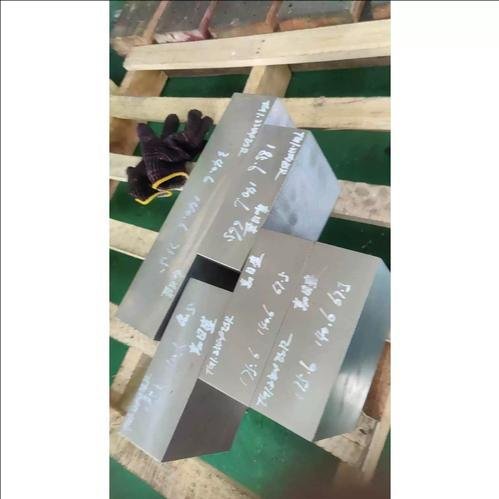
Before discussing mold materials again, we need to understand some basic things about injection molds.
Firstly, the classification of molds is generally divided into five levels according to the length of their service life.
The first level is above one million cycles, the second level is between 500000 and 1 million cycles, the third level is between 300000 and 500000 cycles, the fourth level is between 100000 and 300000 cycles, and the fifth level is below 100000 cycles.
Both the first and second level molds require the use of steel that can be heat treated to a hardness of around HRC50, otherwise it is prone to wear and tear, and the injected products are prone to exceeding the standard.
Therefore, the selected steel should have good heat treatment performance and good cutting performance in a high hardness state. Of course, there are other considerations.
Since I rarely come into contact with domestic plastic mold steel, I can only introduce imported materials commonly used in the Pearl River Delta. Usually, Sweden's 8407 is chosen, S136, 420 in the United States, H13, 2316,2344,083 from Europe, or SKD61 and DC53 from Japan (originally used as hardware mold materials, used in special circumstances).A type of steel.
In addition, the raw materials used in injection molding and the added fillers have a significant impact on the selection, especially the wear and tear of the mold caused by glass fiber.Some plastic materials have acid corrosiveness, while others, such as fiberglass, can cause significant damage to molds due to the addition of reinforcing agents or other modifiers.
Therefore, when selecting materials, comprehensive consideration should be given. Plastics with strong corrosiveness are generally selected from steel materials such as S136,2316,420, while those with weak corrosiveness include SKD61, NAK80, and PAK90,718M.
Strong acidic plastic materials include PVC, POM, PBT.
Weak acidic plastic materials include PC, PP, PMMA, PA,The appearance requirements of the product also have a significant impact on the selection of mold materials. For transparent parts and products that require a polished surface, the available materials include S136,2316,718S, NAK80, PAK90,420.
For molds with high transparency, S136 should be selected, followed by 420.The above is in terms of meeting product requirements, but as a designer, if you only consider these factors, not only will you not be able to become a good designer, but you may also have problems with your job.
The cost of the mold you are involved in is of utmost importance, and you also need to consider the price. Let's compare S136 and 2316, with a difference of 55-60 yuan per kilogram. If you choose improperly, your boss will either fail to take the order or go bankrupt.
There are many pre hardened materials used for third level molds, with grades including S136H, 2316H, 718H, 083H, hardness HB270--- -340. P207187386182312711 is used for fourth - and fifth level molds.
For molds with extremely low requirements, S50C and 45 # steel may also be used, which means that the mold cavity is directly made on the mold base.In addition, specific issues need to be addressed on a case by case basis, and being flexible and adaptable is a basic requirement for a designer.Attached are commonly used steel comparison standards internationally for reference.